Obsessive‑Compulsive Disorder (OCD) affects millions of people worldwide, and many silently struggle with unwanted thoughts and repetitive behaviors every day. If you’re reading this, you’re probably looking to understand OCD better and learn about OCD therapy in Vadodara.This guide walks you through what OCD really is, how it can impact your daily life, and how …

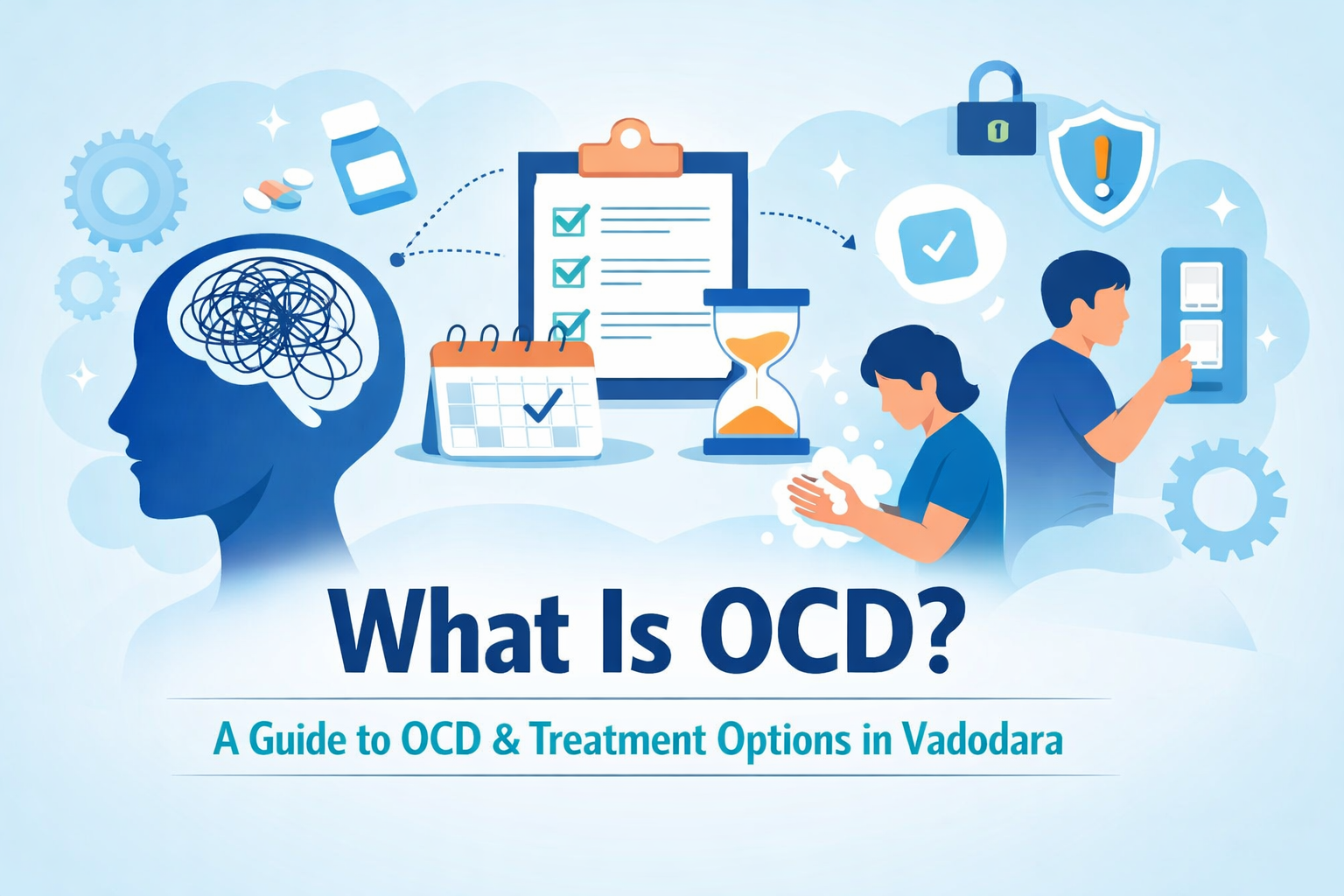
Obsessive‑Compulsive Disorder (OCD) affects millions of people worldwide, and many silently struggle with unwanted thoughts and repetitive behaviors every day. If you’re reading this, you’re probably looking to understand OCD better and learn about OCD therapy in Vadodara.
This guide walks you through what OCD really is, how it can impact your daily life, and how professional OCD therapy in Vadodara, like the care offered by Dr. Shachi Patel at The Mind Clinic, can help you regain control and peace of mind.
What Is OCD?
OCD is a mental health condition characterized by two major components:
Obsessions – unwanted, intrusive thoughts, images, or urges that cause distress (e.g., fears of harming others, fear of contamination).
Compulsions – repetitive actions or mental rituals performed to reduce anxiety caused by obsessions (e.g., frequent hand‑washing, checking locks repeatedly).
People with OCD don’t want these thoughts and behaviors — but find them hard to control or stop, which is why professional OCD therapy in Vadodara can make a real difference.
Common Symptoms of OCD
Symptoms can vary widely, but some of the most common patterns include:
Obsessions
- Fear of germs, dirt, or contamination
- Fear of harm coming to yourself or others
- Unwanted taboo or violent thoughts
- Need for symmetry or things to feel “just right”
Compulsions
- Excessive cleaning or hand‑washing
- Repeated checking (doors, switches, stoves)
- Counting or repeating actions
- Mental rituals (praying, repeating words)
The key difference between everyday worries and OCD is that the thoughts and behaviors are:
- Time‑consuming (over 1 hour per day)
- Distressing
- Interfering with life, work, and relationships
Is OCD Just “Being Neat or Careful”?
No. Many people misunderstand OCD as being just about orderliness. But OCD is a clinical disorder that significantly affects daily functioning. It’s not a personality quirk it’s a treatable mental health condition backed by scientific research.
Causes of OCD
There’s no single cause of OCD. Research suggests a combination of:
Brain chemistry imbalances
Genetic predisposition
Environmental stress factors
Learned behaviors
OCD can begin in childhood, adolescence, or adulthood. It affects both men and women, and it’s more common than most people realize.
How Is OCD Diagnosed?
Diagnosis usually involves a professional evaluation with a qualified therapist or psychiatrist. During assessment, you may be asked about:
- Your thoughts and behaviors
- How often they occur
- How much distress they cause
- Their impact on daily functioning
At The Mind Clinic in Vadodara, evaluations are personalized and conducted with care, empathy, and privacy. The goal is always to understand you, not just your symptoms.
Effective Treatment Options for OCD
Cognitive‑Behavioral Therapy (CBT)
CBT is a structured form of therapy that helps you understand the connection between thoughts, feelings, and behaviors. It teaches tools to respond differently to obsessive thoughts.
Exposure and Response Prevention (ERP)
ERP is the gold standard in OCD treatment. It involves gradual, controlled exposure to feared situations while resisting compulsive responses. Over time, anxiety decreases and confidence grows.
Medication (When Needed)
In some cases, medications like SSRIs may be recommended in combination with therapy to help balance brain chemistry.
Supportive and Mindfulness‑Based Strategies
Techniques like mindfulness, stress management, and healthy lifestyle practices support long‑term recovery.
Why Seek OCD Therapy in Vadodara?
Choosing therapy locally, especially with an experienced professional, helps you:
Understand the real cause of compulsive behaviors
Learn proven recovery tools (like ERP)
Track progress with ongoing support
Reduce symptoms safely and sustainably
Build confidence and life skills for long‑term well‑being
With OCD, early and consistent therapy increases improvement, quality of life, and hope.
Why Choose Dr. Shachi Patel at The Mind Clinic
Dr. Shachi Patel is a leading therapist specializing in anxiety and OCD treatment in Vadodara.
Her approach is:
Evidence‑based and customized
Compassionate and judgment‑free
Focused on real life impact
Grounded in CBT & ERP strategies
You’re treated as a whole person, not just a set of symptoms.
Frequently Asked Questions
1. What is the main difference between OCD and anxiety?
OCD involves specific obsessions and compulsions, while anxiety is a broader emotional state. OCD is one form of anxiety disorder, but not all anxiety is OCD.
2. How long does OCD therapy take?
There’s no fixed timeframe. Many people see significant improvement within 12–20 weekly sessions, depending on severity and consistency.
3. Can kids have OCD?
Yes. OCD can start in childhood or adolescence. Early intervention leads to better outcomes.
4. Is medication always needed for OCD?
Not always. Some people benefit from therapy alone, while others may combine therapy with medication under a psychiatrist’s supervision.
5. What is ERP therapy and does it hurt?
ERP exposes you to feared situations in a controlled way. It can be uncomfortable at first, but it does not harm you — and it significantly reduces fear over time.
6. Can OCD go away completely?
Many people achieve strong long‑term improvement. Some may still experience occasional thoughts, but therapy helps manage them effectively.
7. Is OCD hereditary?
Family history can increase likelihood, but it doesn’t guarantee someone will develop OCD.
8. Can online therapy help with OCD?
Yes — when it’s structured, evidence‑based, and guided by experienced clinicians. In‑person therapy in Vadodara is also available at The Mind Clinic.
Book a Consultation
It’s easy and free!
Tags:OCD therapy Vadodara