
Obsessive-Compulsive Disorder (OCD) can affect the way a person thinks, feels, and responds to everyday situations. Many people experience unwanted thoughts or feel the need to repeat certain actions, but they may not immediately realize that these could be signs of OCD. Sometimes, people simply think they are being extra careful or that they have …

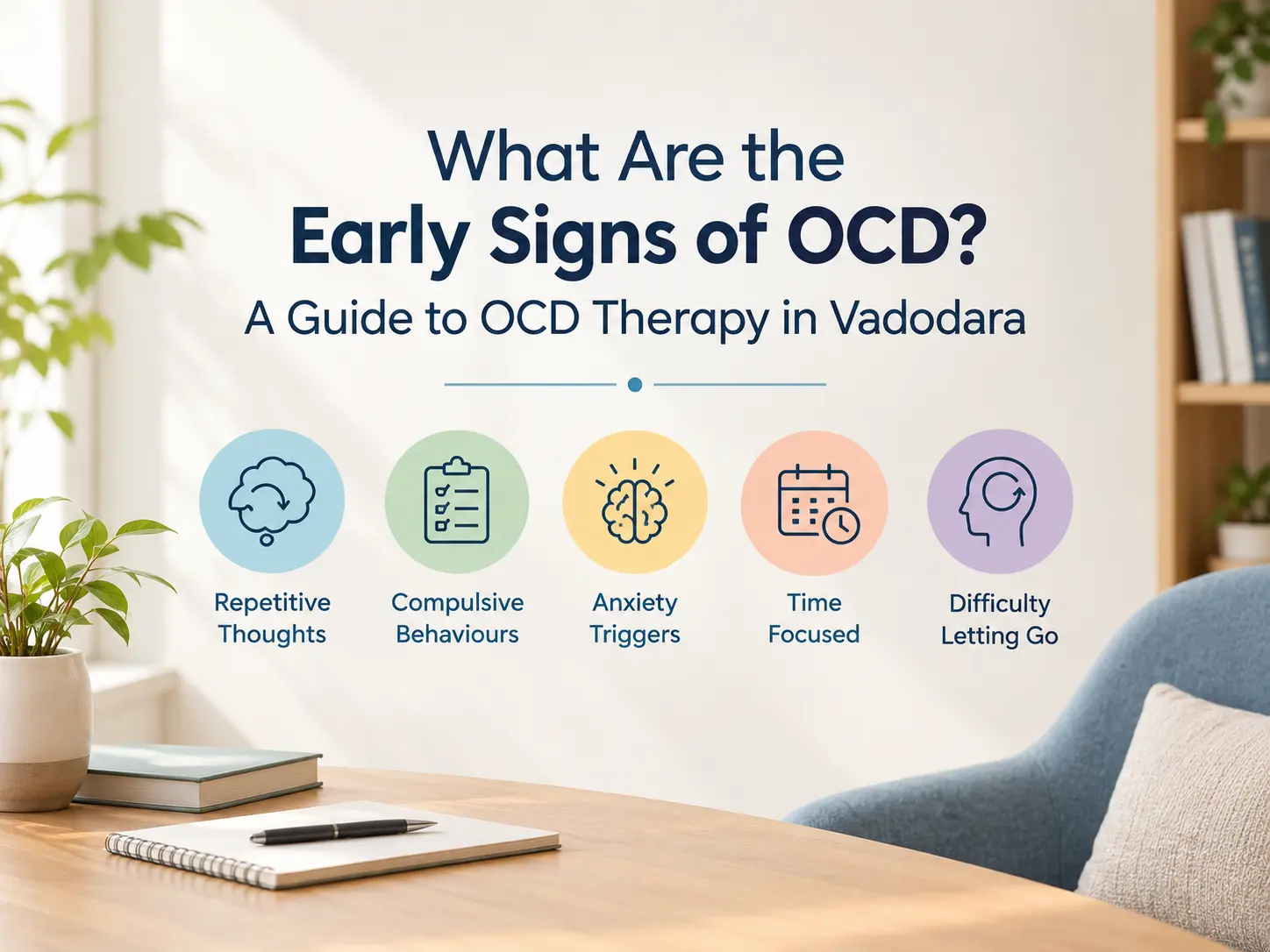
Obsessive-Compulsive Disorder (OCD) can affect the way a person thinks, feels, and responds to everyday situations. Many people experience unwanted thoughts or feel the need to repeat certain actions, but they may not immediately realize that these could be signs of OCD. Sometimes, people simply think they are being extra careful or that they have developed a habit.
OCD can become a concern when unwanted thoughts and repetitive behaviors take up a lot of time, cause distress, or interfere with work, studies, relationships, or daily activities. Recognizing the early signs can help individuals seek appropriate support sooner.
OCD Therapy in Vadodara can provide professional guidance for people who are struggling with obsessive thoughts and compulsive behaviors. At The Mind Clinic, Dr. Shachi Patel offers personalized psychological support in a safe and comfortable environment.
What Is OCD?
OCD stands for Obsessive-Compulsive Disorder. It is a mental health condition involving two main experiences: obsessions and compulsions.
Obsessions are unwanted, repeated thoughts, fears, doubts, or mental images that can create anxiety or discomfort.
Compulsions are repeated actions or mental behaviors that a person feels driven to perform in response to those thoughts or feelings.
For example, someone may repeatedly worry that they forgot to lock the door. They may check it several times even after confirming that it is locked. Checking may provide temporary relief, but the doubt can return, leading to another round of checking.
This cycle can become difficult to break without appropriate support.
What Are the Early Signs of OCD?
The signs of OCD can be different from person to person. Some people experience mainly intrusive thoughts, while others experience both obsessive thoughts and repetitive behaviors.
1. Repeated Checking
One commonly recognized sign is repeated checking. A person may repeatedly check whether the door is locked, the gas is turned off, an appliance is switched off, or an important task has been completed.
Checking once is normal. The concern arises when you feel unable to stop checking even after you know that everything is probably fine.
The checking may provide temporary reassurance, but the doubt can quickly return.
2. Unwanted Intrusive Thoughts
Intrusive thoughts are unwanted thoughts that enter your mind without being invited. They may involve fears, doubts, mistakes, contamination, safety, or other uncomfortable topics.
Having an unwanted thought does not mean you want it to happen. However, people with OCD may become very distressed by these thoughts and may try to perform certain actions to feel safer or more certain.
If intrusive thoughts are frequent and difficult to manage, professional support can help you understand them without automatically reacting to them.
3. Excessive Cleaning or Washing
Another possible sign is repeated cleaning or washing because of an intense fear of germs, contamination, or illness.
A person may wash their hands much more often than necessary, clean objects repeatedly, or avoid touching certain surfaces.
The behavior may temporarily reduce anxiety, but the fear can return and create the need to repeat the behavior.
4. Repeating Actions
Some people feel that they must repeat a particular action a certain number of times or until it feels correct.
This might include repeating a phrase, touching an object, restarting a task, or performing another action repeatedly.
The person may understand that the behavior does not make logical sense but still feel uncomfortable if they do not complete it.
5. Constant Doubt
OCD can create repeated uncertainty about things that most people would normally check once and move on from.
You may wonder:
- “Did I really lock the door?”
- “Did I send the correct message?”
- “What if I made a serious mistake?”
- “What if something goes wrong?”
- “Did I accidentally hurt someone?”
This constant doubt can make everyday decisions exhausting.
6. Needing Things to Feel “Just Right”
Some people with OCD feel uncomfortable when objects are not arranged in a particular way or when an action does not feel complete.
They may repeatedly arrange, adjust, count, or redo something until it feels right.
This does not always involve a specific fear. Sometimes, the discomfort itself creates the urge to repeat the behavior.
7. Seeking Reassurance Again and Again
A person may repeatedly ask family members, friends, or colleagues for reassurance.
For example, they may ask the same question several times because they are worried about making a mistake or causing a problem.
Although reassurance may provide temporary comfort, repeatedly seeking it can become part of the cycle.
How Can OCD Affect Daily Life?
OCD is not simply about being neat, careful, or organized. For some people, obsessive thoughts and compulsive behaviors can consume significant time and emotional energy.
You may find yourself spending a long time checking, cleaning, arranging, thinking, counting, or seeking reassurance. This can interfere with work, studies, relationships, sleep, and personal activities.
Some people also avoid places, objects, situations, or responsibilities because they are afraid of triggering their thoughts or anxiety.
When these patterns become difficult to control, seeking professional guidance can be helpful.
Why Is Early Support Important?
Recognizing OCD symptoms early can help a person understand what is happening instead of blaming themselves for their thoughts or behaviors.
Many people with OCD know that their fears or repeated actions may seem excessive, but knowing this does not always make the urge disappear.
Early professional support can help individuals understand their patterns, identify triggers, and learn healthier ways to respond.
OCD Therapy in Vadodara can provide a structured and supportive environment for working through these concerns.
How Can OCD Therapy Help?
Therapy can help individuals understand the connection between their thoughts, anxiety, and repetitive behaviors.
Instead of automatically responding to every unwanted thought with a compulsive action, therapy can help individuals learn healthier ways of dealing with uncertainty and discomfort.
The exact approach depends on the individual’s symptoms, concerns, and goals.
At The Mind Clinic, Dr. Shachi Patel focuses on understanding each person’s experience and providing personalized psychological support.
What Happens During OCD Therapy?
Many people feel nervous before their first therapy session because they do not know what to expect.
The first session generally provides an opportunity to discuss your concerns, symptoms, daily routine, and how OCD may be affecting your life.
You can talk about the thoughts or behaviors that are bothering you and how often they occur. The psychologist may also explore situations that trigger your anxiety or compulsive behaviors.
You do not need to have everything figured out before your first appointment. The purpose of therapy is to help you understand your experiences and work toward manageable goals.
Can OCD Be Managed?
OCD can be challenging, but professional support can help individuals learn to manage symptoms and improve their daily functioning.
The goal is not necessarily to eliminate every unwanted thought. Everyone experiences unwanted thoughts from time to time.
Instead, therapy can help you develop a different response to those thoughts so they have less control over your decisions and daily activities.
With appropriate support and consistent effort, individuals can learn healthier coping strategies and build greater confidence in managing difficult situations.
OCD and Overthinking: Are They the Same?
OCD and overthinking can sometimes look similar, but they are not necessarily the same.
Overthinking may involve repeatedly analyzing a situation, decision, or problem. OCD can involve intrusive thoughts and compulsive behaviors that are difficult to resist.
For example, someone may worry about whether they locked the door. A person experiencing OCD may repeatedly check the lock, return home to check again, or ask someone else to confirm it.
If you are unsure whether your experiences are related to OCD, speaking with a qualified mental health professional can help you better understand your concerns.
When Should You Seek Professional Support?
Consider seeking professional support if obsessive thoughts or repetitive behaviors are:
- Taking up a significant amount of your time
- Causing ongoing anxiety or distress
- Affecting your work or studies
- Interfering with relationships
- Affecting your sleep
- Making you avoid everyday situations
- Making it difficult to complete normal activities
- Becoming increasingly difficult to control
You do not have to wait until symptoms become severe before seeking help.
If you feel that OCD-related thoughts or behaviors are affecting your quality of life, OCD Therapy in Vadodara may be a useful step toward understanding and managing these concerns.
How Can Family Members Help Someone with OCD?
Family members can play an important role in providing emotional support.
Instead of criticizing someone for repeatedly checking, cleaning, or asking for reassurance, try to listen without judgment. Let them know that they can talk about what they are experiencing.
At the same time, family members may need guidance on how to support someone without unintentionally reinforcing repetitive behaviors.
Professional guidance can help families understand OCD and communicate in a more supportive way.
Why Choose The Mind Clinic?
Choosing a mental health professional is a personal decision. It is important to feel comfortable discussing your thoughts and concerns openly.
At The Mind Clinic, Dr. Shachi Patel provides personalized psychological support for individuals dealing with OCD-related concerns. The focus is on understanding each person’s experiences and creating a supportive environment where they can work toward healthier coping strategies.
If you are looking for OCD Therapy in Vadodara, professional guidance can help you take a clearer look at your symptoms and understand what steps may be appropriate for you.
Simple Ways to Support Your Mental Well-Being
Professional therapy can be an important part of managing OCD, but healthy daily habits can also support overall emotional well-being.
Maintaining a regular sleep routine, staying physically active, spending time with supportive people, and making space for enjoyable activities can help you maintain a healthier routine.
It is also useful to avoid judging yourself for experiencing unwanted thoughts. Having a thought does not mean you want it to happen or that it reflects who you are.
If symptoms continue to interfere with your daily life, professional support remains important.
Summary
The early signs of OCD can include repeated checking, unwanted intrusive thoughts, excessive cleaning, repeating actions, constant doubt, needing things to feel “just right,” and repeatedly seeking reassurance.
These experiences become more concerning when they cause significant distress or interfere with everyday life.
You do not have to manage these concerns alone. OCD Therapy in Vadodara can help individuals understand obsessive thoughts, recognize compulsive patterns, and develop healthier ways to respond to anxiety and uncertainty.
At The Mind Clinic, Dr. Shachi Patel provides personalized and supportive psychological care for people experiencing OCD-related concerns.
If repetitive thoughts or behaviors are taking control of your daily routine, reaching out for professional support can be a positive first step.
Frequently Asked Questions
What are the first signs of OCD?
Early signs may include repeated checking, intrusive thoughts, excessive cleaning, repeated actions, constant doubt, reassurance seeking, or feeling that things must be done in a particular way.
Is repeated checking always OCD?
No. Occasional checking is normal. It may be worth discussing with a professional when checking becomes difficult to control, takes significant time, or causes distress.
Can OCD be managed with therapy?
Yes. Professional therapy can help individuals understand obsessive thoughts and compulsive behaviors and develop healthier ways to respond to them.
How does OCD Therapy in Vadodara help?
It provides professional support to understand OCD-related thoughts and behaviors, identify patterns and triggers, and work toward healthier coping strategies.
Should I seek help if my OCD symptoms are mild?
You can seek professional guidance even when symptoms are mild, especially if they are becoming more frequent or starting to affect your daily routine.
Can OCD affect relationships?
Yes. Repeated reassurance seeking, avoidance, checking, or anxiety can sometimes affect communication and relationships. Professional support can help individuals and families understand these patterns.
Who can I talk to about OCD concerns in Vadodara?
You can consult a qualified mental health professional. At The Mind Clinic, Dr. Shachi Patel provides personalized psychological support for individuals experiencing OCD-related concerns.
Book a Consultation
It’s easy and free!