Overthinking is something many people experience in their daily lives. Whether it is replaying conversations, worrying about the future, questioning decisions, or imagining worst-case scenarios, excessive thinking can leave a person feeling mentally exhausted. While occasional worrying is normal, persistent overthinking can affect emotional well-being, relationships, work performance, and overall quality of life.Many individuals searching …

Overthinking is something many people experience in their daily lives. Whether it is replaying conversations, worrying about the future, questioning decisions, or imagining worst-case scenarios, excessive thinking can leave a person feeling mentally exhausted. While occasional worrying is normal, persistent overthinking can affect emotional well-being, relationships, work performance, and overall quality of life.
Many individuals searching for the Best Psychologist in Vadodara are looking for answers to questions such as, “Why do I overthink everything?” or “How can I stop negative thoughts?” The good news is that overthinking can be managed with the right understanding, practical strategies, and professional support. Learning how thoughts influence emotions and behaviors can help individuals develop healthier ways of responding to stress and uncertainty.
Why Do People Overthink Daily Situations?
Overthinking often develops as the mind tries to predict outcomes, avoid mistakes, or gain control over uncertain situations. However, instead of solving problems, excessive thinking frequently creates more stress and anxiety.
People may overthink because of work pressure, relationship concerns, perfectionism, fear of failure, low self-confidence, past experiences, or major life changes. In many cases, individuals become trapped in repetitive thought patterns that make it difficult to relax and focus on the present moment.
Seeking guidance from the Best Psychologist in Vadodara can help individuals identify the underlying causes of overthinking and develop healthier coping mechanisms.
Understanding the Difference Between Problem Solving and Overthinking
Problem solving involves taking practical steps to address a challenge. Overthinking, on the other hand, involves repeatedly analyzing the same issue without reaching a solution. This cycle often increases stress and emotional exhaustion.
Healthy thinking helps people move forward, while overthinking tends to keep them stuck in fear, doubt, and uncertainty. Recognizing this difference is an important first step toward managing excessive thoughts.
Common Signs That You May Be Overthinking
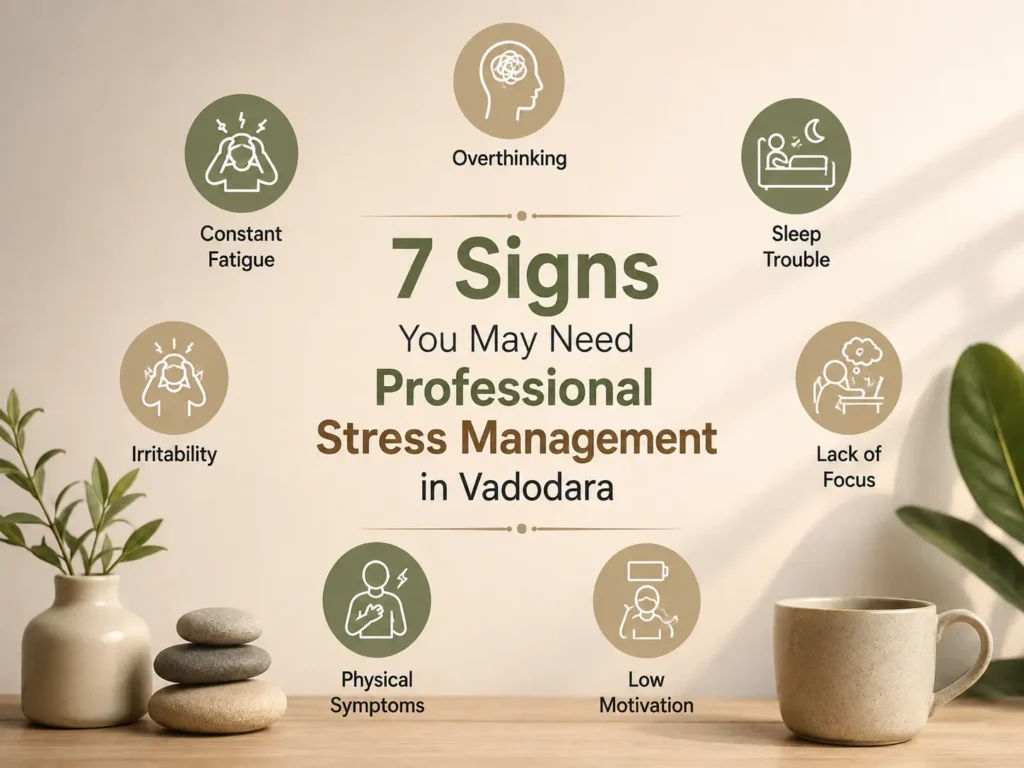
People who overthink often replay past events, worry excessively about the future, seek constant reassurance, and struggle to make decisions. They may find it difficult to switch off their thoughts, resulting in sleep disturbances, irritability, reduced concentration, and increased anxiety.
Identifying these signs early can help prevent overthinking from affecting mental and emotional well-being.
How Does Overthinking Affect Your Mental and Physical Health?
Overthinking does not only affect the mind; it can also impact physical health and daily functioning. Constant worry and repetitive thoughts can lead to stress, anxiety, irritability, difficulty concentrating, and emotional exhaustion. Many individuals who overthink also experience sleep disturbances, headaches, fatigue, and reduced productivity.
Over time, excessive thinking can affect relationships, self-confidence, and overall quality of life. Recognizing these effects early and seeking guidance from the Best Psychologist in Vadodara can help individuals develop healthier coping mechanisms and improve emotional well-being.
Why Chronic Overthinking Should Not Be Ignored
Persistent overthinking can increase stress levels and make everyday situations feel overwhelming. When left unmanaged, it may contribute to anxiety disorders, burnout, and emotional distress. Learning to manage thoughts effectively can help individuals regain control and improve their overall mental wellness.
When Should You Consult the Best Psychologist in Vadodara for Overthinking?
Occasional worrying is normal, but if repetitive thoughts are interfering with your sleep, relationships, work, or daily activities, it may be beneficial to seek professional support. Early intervention can prevent emotional difficulties from becoming more severe and provide practical tools for managing stress.
A psychologist can help individuals understand the root causes of overthinking and develop strategies that promote healthier thought patterns. Therapy provides a safe and supportive environment where individuals can openly discuss their concerns and work toward lasting emotional well-being.
Professional Support Can Help You Break the Cycle
The Best Psychologist in Vadodara uses evidence-based approaches to help individuals identify negative thinking patterns, improve emotional resilience, and develop healthier coping skills. With the right support, it is possible to reduce overthinking and lead a calmer, healthier, and happier life.
How Can Professional Support Help with Overthinking?
While self-help strategies can be beneficial, professional guidance provides individuals with a deeper understanding of their thoughts and emotions. Therapy offers a safe and supportive environment where individuals can openly discuss their concerns without fear of judgment.
The Best Psychologist in Vadodara helps individuals understand negative thought patterns and teaches evidence-based techniques that promote emotional resilience and healthier thinking habits. Counseling also helps improve self-awareness, confidence, and stress management skills.
Through therapy, individuals learn that thoughts are not facts and that it is possible to respond to difficult situations in more balanced and constructive ways.
Practical Ways to Stop Overthinking Daily Situations
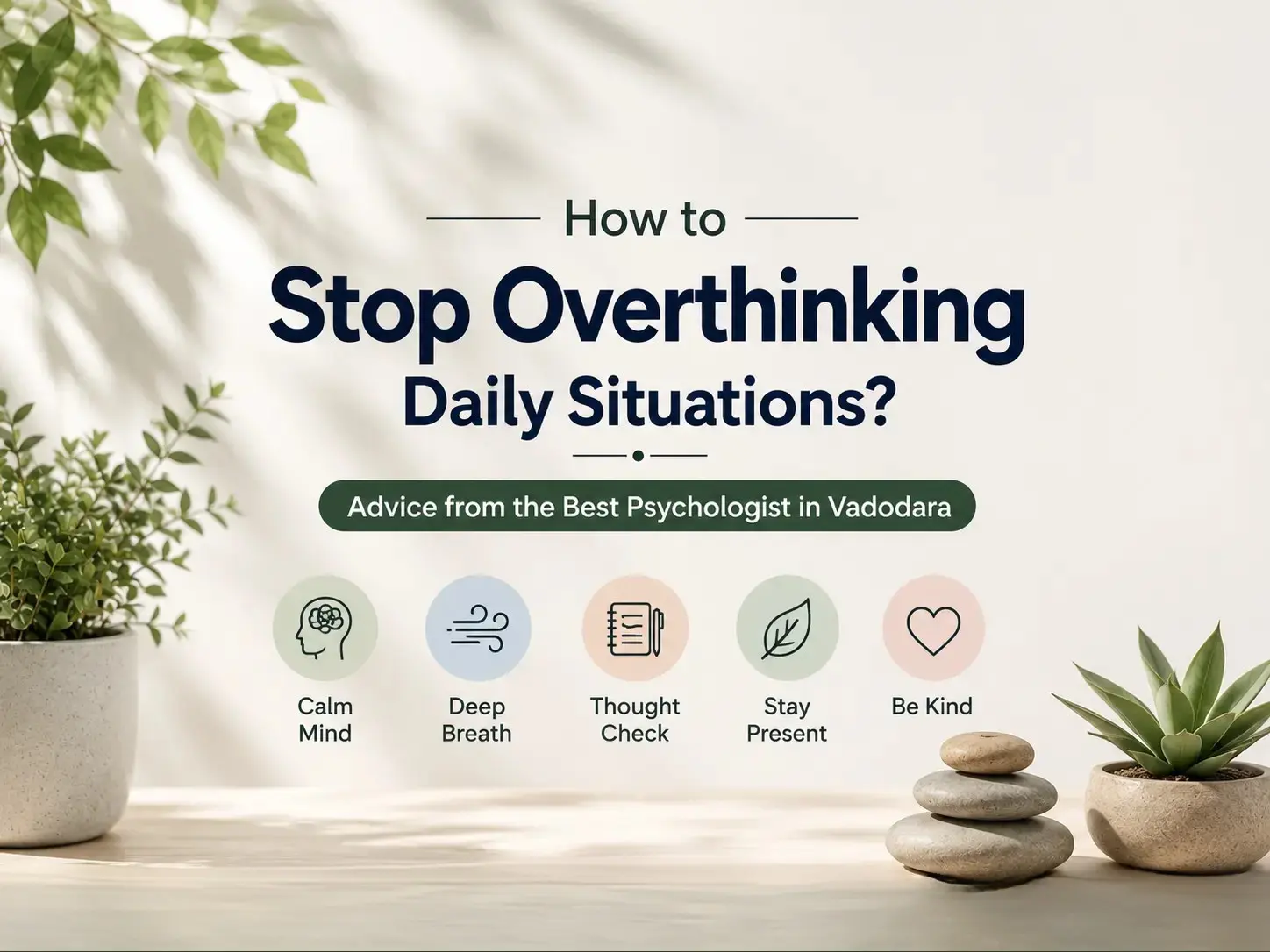
Managing overthinking begins with developing awareness of thought patterns. Practicing mindfulness, engaging in regular physical activity, maintaining healthy sleep habits, and focusing on what can be controlled are effective ways to reduce mental clutter.
Limiting excessive reassurance-seeking and challenging unrealistic assumptions can also help individuals break the cycle of repetitive thinking. Journaling, relaxation techniques, and spending time on meaningful activities can contribute to better emotional balance.
Building Healthier Thought Patterns
Changing thought patterns takes time and patience. Instead of striving for perfection, individuals can focus on progress and self-compassion. Learning to accept uncertainty and understanding that not every situation requires complete control can significantly reduce anxiety and overthinking.
With consistent effort and appropriate support, it is possible to develop healthier ways of thinking and improve overall mental well-being.
Summary
Overthinking can affect anyone and often arises from stress, fear, uncertainty, or perfectionism. Although excessive thinking may feel overwhelming, it is manageable with the right strategies and professional support. Understanding the difference between problem-solving and overthinking, recognizing early signs, and learning healthier coping mechanisms can help individuals regain emotional balance.
At The Mind Clinic, Dr. Shachi Patel, compassionate and personalized psychological care to help individuals understand their thoughts, manage stress effectively, and build healthier habits for a happier and more fulfilling life.
Frequently Asked Questions
1. Why do I overthink small things?
Overthinking small situations is often linked to anxiety, perfectionism, stress, or fear of making mistakes. Understanding these patterns can help individuals develop healthier responses.
2. Can overthinking be a sign of anxiety?
Yes. Persistent overthinking is commonly associated with anxiety and stress. Professional support can help individuals manage these concerns more effectively.
3. How can I stop negative thoughts?
Practicing mindfulness, maintaining healthy routines, challenging unrealistic beliefs, and seeking psychological support can help reduce negative thinking patterns.
4. When should I consult the Best Psychologist in Vadodara for overthinking?
If overthinking is affecting your sleep, relationships, productivity, or overall quality of life, consulting a psychologist can provide valuable guidance and practical coping strategies.
5. Can therapy help with overthinking?
Yes. Therapy helps individuals understand the root causes of excessive thinking and teaches evidence-based techniques that promote healthier emotional and mental well-being.
Book a Consultation
It’s easy and free!