Relationships are an important part of our lives, but maintaining healthy relationships is not always easy. Whether it is a disagreement with your partner, misunderstandings between family members, communication gaps, or ongoing emotional tension, relationship challenges can affect your mental and emotional well-being.Sometimes, even people who care deeply about each other struggle to understand one …

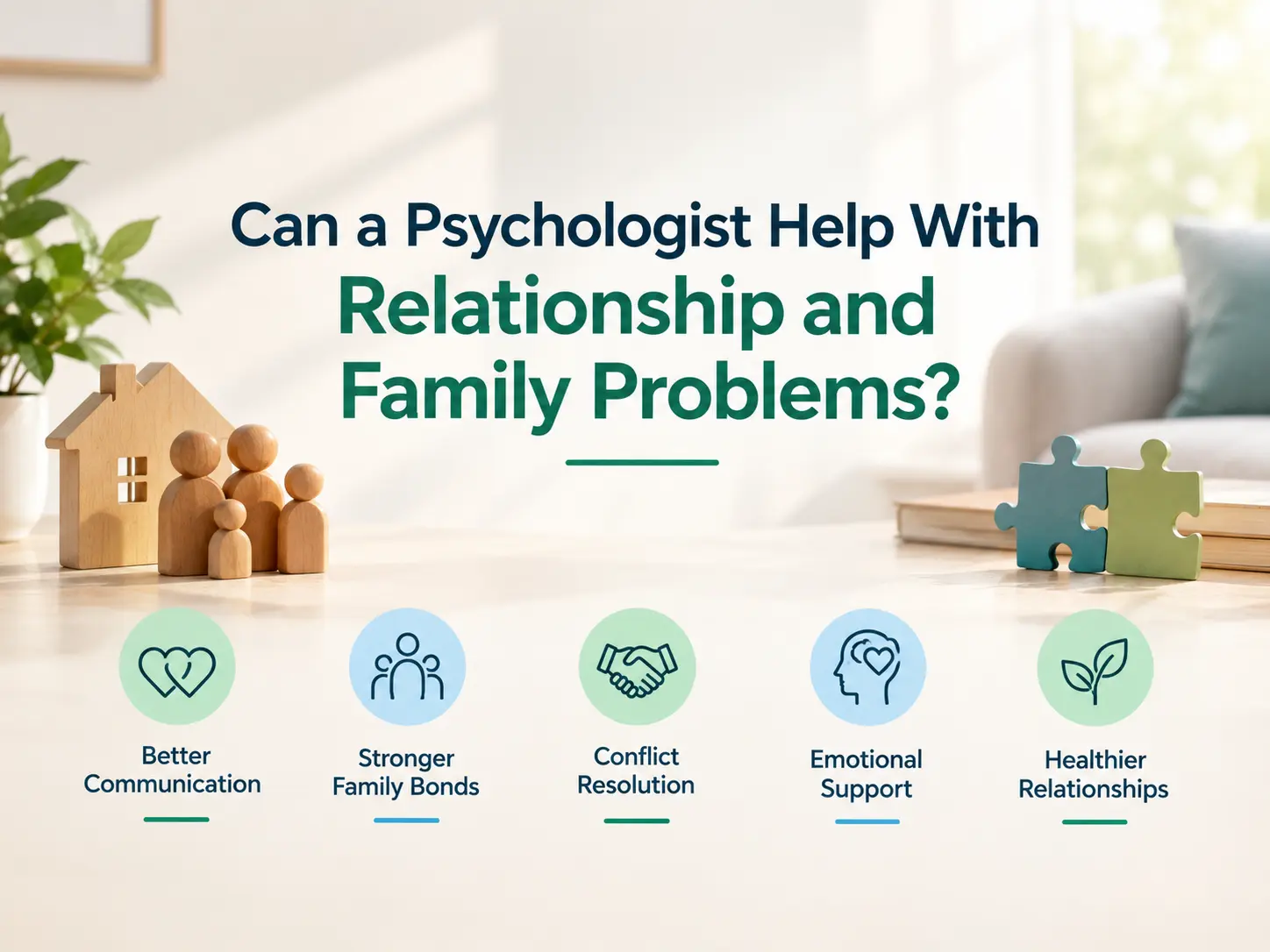
Relationships are an important part of our lives, but maintaining healthy relationships is not always easy. Whether it is a disagreement with your partner, misunderstandings between family members, communication gaps, or ongoing emotional tension, relationship challenges can affect your mental and emotional well-being.
Sometimes, even people who care deeply about each other struggle to understand one another. Small disagreements may turn into repeated arguments, conversations may become uncomfortable, and family members may gradually feel emotionally distant.
This is where professional psychological support can help.
Yes, a psychologist can help individuals, couples, and families understand relationship difficulties, improve communication, manage emotional reactions, and develop healthier ways to handle conflicts. Psychologists provide a supportive environment where people can discuss their concerns, understand different perspectives, and work towards positive changes.
If you are looking for a Psychologist in Vadodara, understanding how psychological counselling can support relationship and family concerns can help you decide whether professional guidance is right for you.
What Role Does a Psychologist Play in Relationship and Family Problems?
A psychologist helps people understand how their thoughts, emotions, behaviours, and past experiences influence their relationships.
Relationship problems are not always caused by one person. Sometimes, differences in expectations, communication styles, emotional needs, or family responsibilities create misunderstandings between people.
A psychologist can help individuals recognise these patterns and explore healthier ways to respond.
Depending on the situation, psychological support may involve:
- Understanding emotional triggers and reactions.
- Improving communication and listening skills.
- Managing anger, frustration, and disappointment.
- Identifying unhealthy relationship patterns.
- Developing healthy boundaries.
- Addressing trust and emotional connection concerns.
- Learning practical conflict-resolution strategies.
The goal is not to decide who is right or wrong. Instead, therapy focuses on helping people understand the situation and make thoughtful decisions about their relationships.
What Relationship Problems Can a Psychologist Help With?
People seek psychological support for different relationship concerns. Some issues develop gradually, while others appear after a major life change or difficult experience.
Here are some common concerns that a psychologist may help address.
1. Communication Gaps Between Partners
Communication is one of the foundations of a healthy relationship. However, expressing feelings is not always easy.
You may feel that your partner does not listen to you, misunderstands your intentions, or avoid important conversations. Sometimes, both partners want to resolve an issue but struggle to communicate without arguing.
Psychological counselling can help individuals and couples:
- Express their feelings more clearly.
- Listen without immediately becoming defensive.
- Understand each other’s expectations.
- Discuss disagreements respectfully.
- Avoid repeated communication patterns that create conflict.
Learning to communicate effectively can help create a more understanding relationship.
2. Frequent Arguments and Unresolved Conflicts
Every couple experiences disagreements. Differences in opinions, priorities, financial decisions, parenting styles, and daily responsibilities are normal.
However, when the same arguments happen repeatedly without resolution, they can create emotional exhaustion.
A psychologist can help identify what is triggering these disagreements and why certain situations lead to strong emotional reactions.
Counselling may also help couples practise healthier ways to approach difficult conversations, understand each other’s perspectives, and find practical solutions.
3. Trust Issues in Relationships
Trust can be affected by dishonesty, broken promises, misunderstandings, past experiences, or infidelity.
When trust becomes difficult, one partner may constantly feel uncertain, while the other may feel misunderstood or questioned.
Psychological support can help individuals explore the reasons behind these feelings and understand what rebuilding trust may involve.
This process may include improving communication, discussing emotional needs, establishing boundaries, and addressing unresolved concerns.
Rebuilding trust takes time and requires willingness from the people involved. Counselling cannot guarantee reconciliation, but it can help people understand their options and make informed decisions.
4. Emotional Distance Between Partners
Sometimes, couples continue living together and managing their daily responsibilities but feel emotionally disconnected.
Conversations may become limited to household matters, work, or family responsibilities. Spending time together may no longer feel meaningful.
Emotional distance can develop due to stress, unresolved conflicts, changing priorities, or a lack of emotional communication.
A psychologist can help individuals understand the reasons behind this distance and explore ways to improve emotional connection.
5. Relationship Stress After Major Life Changes
Major life changes can influence relationships in unexpected ways.
Marriage, pregnancy, becoming parents, relocation, career changes, financial difficulties, or caring for ageing parents can introduce new responsibilities.
Even positive changes can create pressure when people struggle to adjust.
Psychological counselling can help individuals and couples manage these transitions, discuss changing expectations, and develop healthier coping strategies.
Can a Psychologist Help With Family Problems?
Yes. A psychologist can help individuals and families understand recurring conflicts, improve communication, and manage emotional difficulties within the family.
Family relationships involve different personalities, expectations, generations, and responsibilities. Because of these differences, misunderstandings can sometimes become difficult to resolve.
Some common family concerns include:
Parent-Child Communication Problems
Parents and children may have different expectations, opinions, and ways of expressing emotions.
Children may struggle to communicate their concerns, while parents may find it difficult to understand changes in their child’s behaviour.
A psychologist can help families improve communication, understand emotional needs, and develop supportive ways of interacting.
Conflicts Between Family Members
Disagreements about responsibilities, personal decisions, finances, or household expectations can create tension between family members.
Counselling can help people understand different perspectives, identify recurring conflict patterns, and work towards respectful communication.
Generational Differences
Different generations may have different beliefs about careers, marriage, independence, parenting, and lifestyle choices.
These differences can sometimes create pressure or misunderstandings.
Psychological support can help family members communicate their expectations while respecting individual boundaries and personal choices.
Family Stress and Emotional Pressure
Family responsibilities, caregiving, financial uncertainty, and major life events can affect everyone’s emotional wellbeing.
A psychologist can help individuals recognise stress patterns, develop coping strategies, and understand how family dynamics influence their mental health.
How Does Family Counselling Help Improve Family Relationships?
Family counselling focuses on understanding relationship patterns and helping family members communicate more effectively.
Rather than focusing only on one person’s behaviour, family counselling looks at how different interactions, expectations, and emotional responses influence the family as a whole.
Depending on the concerns, counselling may help families:
- Understand different perspectives: Recognise that family members may experience the same situation differently.
- Improve communication: Encourage open conversations without blame or unnecessary arguments.
- Manage emotional reactions: Learn to respond thoughtfully during difficult situations.
- Establish healthy boundaries: Understand personal space, responsibilities, and individual needs.
- Resolve recurring conflicts: Identify patterns that repeatedly create tension within the family.
Not every family member needs to participate in counselling. Individual sessions may also help someone understand their role in a difficult family situation and decide how to respond.
When Should You Consider Visiting a Psychologist for Relationship Problems?
Many people wait until relationship difficulties become overwhelming before considering professional support. However, you do not need to wait for a serious conflict to speak with a psychologist.
Consider seeking support if:
- You and your partner argue frequently about the same issues.
- You feel unheard, misunderstood, or emotionally disconnected.
- Family disagreements are affecting your peace of mind.
- You struggle to express your feelings openly.
- Relationship stress is affecting your sleep, concentration, or work.
- You find it difficult to manage anger or emotional reactions.
- You feel stuck in a relationship pattern that you cannot change.
A psychologist can help you understand these experiences and explore suitable ways to manage them.
If a relationship involves threats, coercion, or violence, individual support and safety planning may be more appropriate than joint counselling.
What Is the Difference Between Individual Therapy, Couples Counselling, and Family Therapy?
People often assume that all relationship-related psychological support involves attending sessions together. However, the right approach depends on the concern.
Type of support | Main focus |
Individual therapy | Understanding personal emotions, thoughts, and relationship patterns. |
Couples counselling | Improving communication, addressing conflicts, and understanding relationship concerns. |
Family therapy | Improving interactions and communication between family members. |
Individual Therapy
Individual therapy allows you to discuss personal relationship concerns privately with a psychologist.
It can be helpful when you are experiencing emotional stress, relationship confusion, trust issues, or difficulty setting boundaries.
Couples Counselling
Couples counselling provides a structured environment where partners can discuss concerns, understand each other’s perspectives, and work on communication.
It may be helpful for couples experiencing repeated disagreements, emotional distance, or difficulties adjusting to life changes.
Family Therapy
Family therapy focuses on interactions between family members. It can help parents, children, and other family members understand recurring problems and develop healthier communication patterns.
The psychologist can help determine which approach may be suitable based on your concerns and circumstances.
What Happens During Your First Psychology Counselling Session?
If you have never visited a psychologist before, you may feel nervous about what to expect. You might wonder what questions they will ask or whether you need to explain everything about your relationship.
The first session is generally an opportunity to understand your concerns and discuss what kind of support may be helpful.
Here is what you can generally expect:
- Understanding your concerns: The psychologist may ask about the challenges you are experiencing and how they affect your daily life.
- Discussing emotional experiences: You may explore feelings such as frustration, sadness, anger, anxiety, or confusion.
- Understanding relationship patterns: The discussion may focus on communication, expectations, recurring disagreements, and emotional responses.
- Exploring suitable approaches: Based on your needs, the psychologist may suggest an appropriate counselling or therapy approach.
- Discussing future sessions: You can understand the possible next steps, goals, and expected approach to counselling.
You do not need to prepare perfect answers. You can explain your situation in your own words and ask questions whenever you feel unsure.
How to Choose the Right Psychologist in Vadodara for Relationship and Family Problems?
Choosing a psychologist is a personal decision. You should feel comfortable discussing sensitive concerns and confident that your experiences are being taken seriously.
If you are searching for a Psychologist in Vadodara, consider these factors:
- Professional qualifications: Check the psychologist’s educational qualifications, registration where applicable, and professional experience.
- Relevant experience: Look for experience in relationship concerns, emotional wellbeing, couples counselling, or family-related difficulties.
- Counselling approach: Understand how sessions are conducted and which approach may suit your situation.
- Comfort and communication: Choose someone who listens without judging or making you feel uncomfortable.
- Confidentiality: Ask how your personal information and session discussions are protected.
- Clear guidance: A good professional should explain the counselling process and help you understand realistic expectations.
At The Mind Clinic – Dr. Shachi Patel, individuals seeking mental health support in Vadodara can explore guidance for emotional and psychological concerns. When considering relationship or family counselling, check the available services and the professional’s relevant experience.
Conclusion
Relationship and family problems can sometimes feel difficult to handle, especially when the same misunderstandings and disagreements keep happening. However, experiencing challenges does not mean that a relationship cannot improve.
A psychologist can help individuals, couples, and families understand emotional concerns, communicate more effectively, and develop healthier ways to manage conflicts.
If relationship stress is affecting your emotional wellbeing, seeking professional guidance can be a positive step.
The Mind Clinic – Dr. Shachi Patel encourages greater awareness of mental and emotional wellbeing. If you are looking for a Psychologist in Vadodara, consider seeking guidance from a qualified professional who understands your concerns and provides a supportive environment.
Remember, healthy relationships are not about never disagreeing. They are about learning to understand, respect, and communicate with one another.
Frequently Asked Questions
Can I visit a psychologist alone for relationship problems?
Yes. You can attend individual therapy even if your partner or family members are not interested in counselling. Individual sessions can help you understand your emotions, establish boundaries, and manage relationship stress.
How do I know if my family needs counselling?
Frequent arguments, communication difficulties, unresolved disagreements, emotional distance, and ongoing family stress may indicate that professional guidance could be helpful.
Can a psychologist help with conflicts between parents and children?
Yes. Psychological support can help parents and children understand each other’s perspectives, improve communication, and manage disagreements more constructively.
How many counselling sessions are needed for relationship problems?
There is no fixed number of sessions. It depends on the nature of the concerns, individual circumstances, counselling goals, and progress over time.
Is couples counselling helpful if we argue frequently?
Yes. Couples counselling can help partners identify recurring conflict patterns, understand emotional triggers, and practise healthier communication techniques.
What is the difference between a psychologist and a marriage counsellor?
A psychologist has professional training in understanding thoughts, emotions, and behaviour. A marriage counsellor generally focuses on relationship concerns and couples’ communication. Qualifications and training vary, so it is important to check the professional’s credentials and experience.
Book a Consultation
It’s easy and free!