Have you ever felt completely exhausted even after getting enough sleep, struggled to enjoy things you once loved, or felt irritated over small situations? These experiences can sometimes be associated with emotional burnout, which may develop due to prolonged stress, ongoing responsibilities, relationship difficulties, work pressure, or continuous emotional demands without enough time to recover. …

Have you ever felt completely exhausted even after getting enough sleep, struggled to enjoy things you once loved, or felt irritated over small situations? These experiences can sometimes be associated with emotional burnout, which may develop due to prolonged stress, ongoing responsibilities, relationship difficulties, work pressure, or continuous emotional demands without enough time to recover. It is more than feeling tired after a busy day, as it can gradually affect your thoughts, emotions, relationships, and daily routine. The good news is that you do not have to manage everything alone. At The Mind Clinic – Dr. Shachi Patel, individuals can explore professional psychological support to understand the reasons behind emotional exhaustion and develop healthier ways to cope. If you are looking for the Best Psychologist in Vadodara, recognising the warning signs of emotional burnout and seeking appropriate support can be a positive step towards better emotional wellbeing.
What Is Emotional Burnout?
Emotional burnout is a state of mental and emotional exhaustion that can develop after dealing with prolonged stress or continuous emotional pressure.
Imagine spending every day trying to meet expectations, solve problems, support others, and keep everything under control. You may continue doing what is expected of you, but internally, you start feeling overwhelmed.
Even simple tasks may begin to feel difficult. You might become less patient, lose interest in social activities, or feel like you have nothing left to give emotionally.
Emotional burnout can affect people in different situations, including:
Working professionals managing demanding schedules.
Parents balancing family responsibilities and personal needs.
Students dealing with academic pressure and expectations.
Caregivers supporting family members over long periods.
Individuals experiencing relationship or personal difficulties.
It is important to understand that emotional burnout is not a personal failure. It can be a sign that your emotional and mental resources need attention and support.
What Are the Common Signs of Emotional Burnout?
Emotional burnout does not look the same for everyone. Some people become quiet and withdrawn, while others experience irritation, frustration, or difficulty controlling their emotions.
Here are some common signs worth paying attention to.
1. Feeling Emotionally Exhausted
You may feel tired even when you have not done much physically. Conversations, responsibilities, and everyday decisions may start feeling overwhelming.
You might also feel that you no longer have the emotional energy to listen to others or deal with additional problems.
2. Losing Interest in Things You Once Enjoyed
Activities that previously made you happy may no longer feel interesting. You might avoid meeting friends, participating in hobbies, or spending time on things you once looked forward to.
This change can sometimes happen gradually, making it difficult to recognise at first.
3. Becoming Irritated Over Small Things
When you are emotionally exhausted, your patience may become shorter. Small disagreements, unexpected changes, or ordinary requests may trigger frustration.
You might later regret your reactions but still find it difficult to respond differently when similar situations happen again.
4. Difficulty Concentrating
Emotional pressure can make it harder to focus, remember things, or make decisions.
You may find yourself reading the same information repeatedly, forgetting small tasks, or struggling to complete work that usually feels manageable.
5. Feeling Disconnected From Others
Sometimes, emotional burnout can make you withdraw from people. You may avoid conversations, stop sharing your feelings, or feel lonely even when surrounded by family and friends.
This does not necessarily mean you do not care about others. You may simply feel too emotionally exhausted to connect.
6. Changes in Sleep and Daily Routine
Ongoing stress and emotional exhaustion may affect your sleep, appetite, energy levels, and everyday habits.
You may struggle to fall asleep because your mind keeps thinking about responsibilities, or you may wake up feeling unrefreshed.
If these experiences continue or interfere with your daily life, consider speaking with a qualified mental health professional.
What Can Cause Emotional Burnout?
There is rarely one single reason behind emotional burnout. It often develops when different pressures continue for a long time without enough emotional recovery.
Some common contributing factors include:
1. Continuous Work Pressure
Long working hours, unrealistic deadlines, workplace conflicts, and the pressure to perform can gradually affect your mental wellbeing. Even after finishing work, you may keep thinking about pending tasks and responsibilities.
2. Taking Care of Everyone Except Yourself
Do you often put other people’s needs before your own? Supporting family members, managing household responsibilities, or caring for someone can become emotionally demanding, especially when you rarely get time for yourself.
3. Relationship and Family Conflicts
Frequent arguments, misunderstandings, unresolved issues, and a lack of emotional support can leave you feeling mentally drained.
4. Setting Unrealistic Expectations
Sometimes, the pressure does not come only from other people. You may expect yourself to perform perfectly, avoid mistakes, keep everyone happy, or manage everything independently.
Over time, these expectations can become difficult to maintain.
5. Not Having Enough Time to Recover
When your days are constantly filled with responsibilities, you may not get enough opportunities to relax, enjoy your interests, or process your emotions.
Understanding these contributing factors is an important step towards managing emotional burnout.
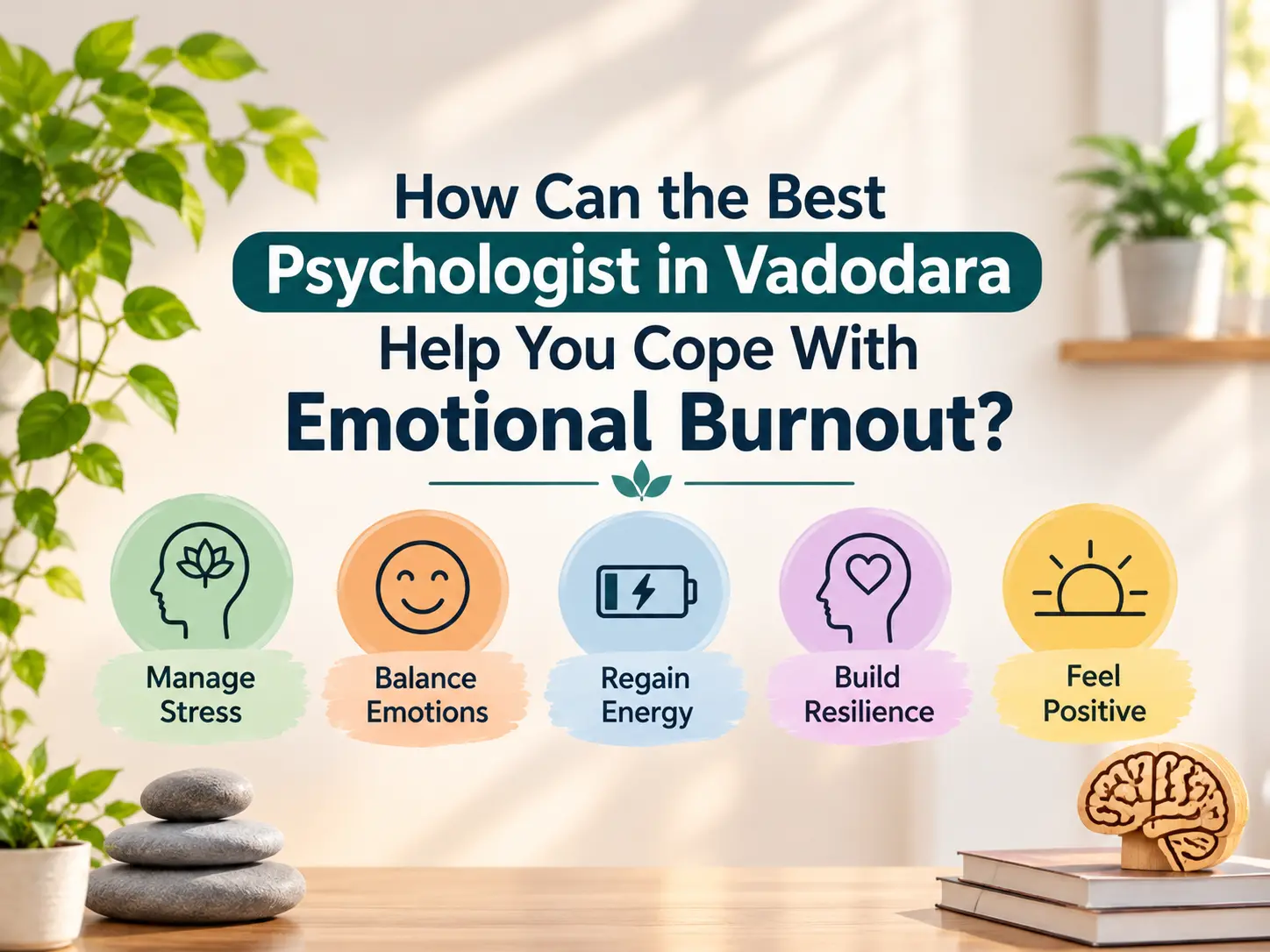
How Can the Best Psychologist in Vadodara Help You Cope With Emotional Burnout?
When emotional exhaustion starts affecting your personal life, work, or relationships, professional support can help you understand what is happening and what you can do about it.
A psychologist does not simply tell you to think positively or stop worrying. Instead, they help you explore your experiences, understand emotional patterns, and develop practical ways to handle challenging situations.
Here are some ways psychological support may help.
1. Understanding What Is Draining You Emotionally
Sometimes, you know you are exhausted but cannot identify exactly why.
A psychologist can help you explore different areas of your life, such as work pressure, family expectations, relationship concerns, personal experiences, and emotional habits.
Understanding these contributing factors can help you recognise what needs attention.
2. Learning to Manage Stress and Emotional Reactions
When you are emotionally overwhelmed, even small situations can trigger frustration, sadness, or anxiety.
Through suitable therapeutic approaches, a psychologist may help you recognise emotional triggers, understand your reactions, and practise healthier ways to respond.
3. Developing Healthy Boundaries
Do you find it difficult to say no because you worry about disappointing someone?
Many people take on more responsibilities than they can comfortably manage. Learning to communicate your limits, express your needs, and protect your personal time can help reduce unnecessary emotional pressure.
4. Changing Unhelpful Thought Patterns
Thoughts such as “I must handle everything,” “I cannot make mistakes,” or “I am disappointing everyone” can increase emotional pressure.
Psychological approaches such as Cognitive Behavioural Therapy (CBT), when appropriate, can help you identify unhelpful thinking patterns and develop more balanced ways of looking at situations.
5. Improving Relationships and Communication
Emotional burnout can affect how you communicate with family members, friends, colleagues, and partners.
A psychologist can help you understand how emotional stress influences your interactions and work towards healthier communication and relationship patterns.
6. Creating Practical Coping Strategies
Everyone experiences emotional pressure differently. A psychologist can help you explore coping strategies that suit your circumstances, rather than suggesting the same solution for everyone.
The aim is to help you gradually develop healthier ways of managing everyday challenges.
What Can You Do to Manage Emotional Burnout in Daily Life?
Professional guidance can be helpful, but small changes in your everyday routine can also support emotional wellbeing.
Here are a few practical steps you can start with.
Recognise your limits: You do not have to complete everything in one day. Give yourself permission to prioritise important tasks.
Take regular breaks: Step away from work or stressful activities for a few minutes when possible.
Make time for yourself: Spend time doing something you genuinely enjoy, even if it is a simple activity.
Stay connected: Talk to someone you trust instead of keeping every concern to yourself.
Maintain a healthy routine: Try to follow regular sleep, meal, and physical activity habits.
Practise saying no: Avoid taking on additional responsibilities when you already feel overwhelmed.
Notice your emotions: Instead of ignoring how you feel, take some time to understand what may be causing those feelings.
You do not need to change everything overnight. Start with one or two manageable steps and build from there.
When Should You Visit a Psychologist for Emotional Burnout?
Feeling tired after a difficult week is common. However, if emotional exhaustion continues, keeps returning, or begins affecting your everyday life, it may be time to seek professional support.
Consider speaking with a psychologist if:
You constantly feel emotionally drained or overwhelmed.
You struggle to manage your emotions or frequent irritation.
You have lost interest in activities you previously enjoyed.
Your sleep, concentration, or daily routine has changed.
Your relationships are being affected by your emotional state.
You feel unable to manage ongoing stress on your own.
A psychologist can help assess your concerns and understand whether they are related to prolonged stress, burnout, or another mental health difficulty. Similar symptoms can have different causes, so a proper assessment is important.
If you are experiencing thoughts of harming yourself or feel unsafe, seek urgent professional help rather than waiting for a routine appointment.
What Happens During a Psychology Session for Emotional Burnout?
If you have never visited a psychologist before, you may wonder what you will be expected to share.
Your first session generally involves understanding your concerns, personal experiences, and current challenges.
You may be asked questions such as:
When did you first start feeling emotionally exhausted?
Are there particular situations that make you feel overwhelmed?
Has your sleep or daily routine changed?
Are work, family, or relationship concerns affecting you?
What would you like to improve through therapy?
You do not need to prepare perfect answers. You can share your experiences at your own pace.
Based on your concerns, the psychologist may suggest suitable therapeutic approaches and discuss possible next steps. The process is individual, and progress can vary from person to person.
Take the First Step Towards Better Emotional Wellbeing
You do not have to wait until you feel completely overwhelmed to take care of your mental health. Sometimes, recognising that you are emotionally exhausted is the first step towards making meaningful changes.
Understanding your feelings, setting healthy boundaries, and seeking professional guidance can help you manage difficult situations with greater awareness.
If emotional burnout is affecting your everyday life, consider speaking with a qualified professional. At The Mind Clinic – Dr. Shachi Patel, you can explore psychological support to better understand your concerns and work towards improved emotional wellbeing.
If you are searching for the Best Psychologist in Vadodara, remember that asking for support is not a weakness. Your mental wellbeing deserves attention, care, and understanding.
Frequently Asked Questions
Can a psychologist help with emotional burnout?
Yes. A qualified psychologist can help you understand the factors contributing to emotional exhaustion, identify unhelpful patterns, and develop healthier coping strategies.
How do I know if I am experiencing emotional burnout?
You may notice ongoing emotional exhaustion, irritability, reduced motivation, difficulty concentrating, withdrawal from others, or changes in your daily routine. A professional assessment can help clarify what you are experiencing.
Is emotional burnout the same as depression?
No. Emotional burnout and depression are not the same, although some experiences, such as exhaustion, low motivation, and reduced interest, can overlap. A mental health professional can help understand the difference.
How long does it take to recover from emotional burnout?
There is no fixed recovery timeline. It depends on contributing factors, how long the difficulties have been present, your circumstances, and the support you receive.
Can emotional burnout affect relationships?
Yes. Emotional exhaustion may make communication more difficult and increase irritability or withdrawal. This can affect relationships with partners, family members, and friends.
When should I consult the best psychologist in Vadodara?
Consider consulting a qualified psychologist when emotional exhaustion or ongoing stress starts affecting your work, relationships, sleep, or daily activities.
Book a Consultation
It’s easy and free!